Memorandum-Book
The Memorandum-Book is the official contract of the Paris Opera House, the document that defines the management's duties and privileges. It is this very book that the Opera Ghost secretly alters, adding clauses in red ink that demand a monthly allowance and the exclusive use of Box Five. These additions become the central instrument of Erik's blackmail, the source of endless torment for the managers, and the key to understanding the ghost's hold over the Opera's administration.
The Memorandum-Book and Its Official Purpose
The Memorandum-Book is introduced as the standard contract of the National Academy of Music, beginning with the well-known words stating that "the management of the Opera shall give to the performance of the National Academy of Music the splendor that becomes the first lyric stage in France." It ends with Clause 98, which stipulates that the privilege can be withdrawn if the manager infringes the conditions stipulated in the book. Following this are four numbered conditions, which outline the basic obligations of the management. This document is thus the legal and administrative backbone of the Opera, a formal agreement between the state and the managers.
The Ghost's Red-Ink Additions
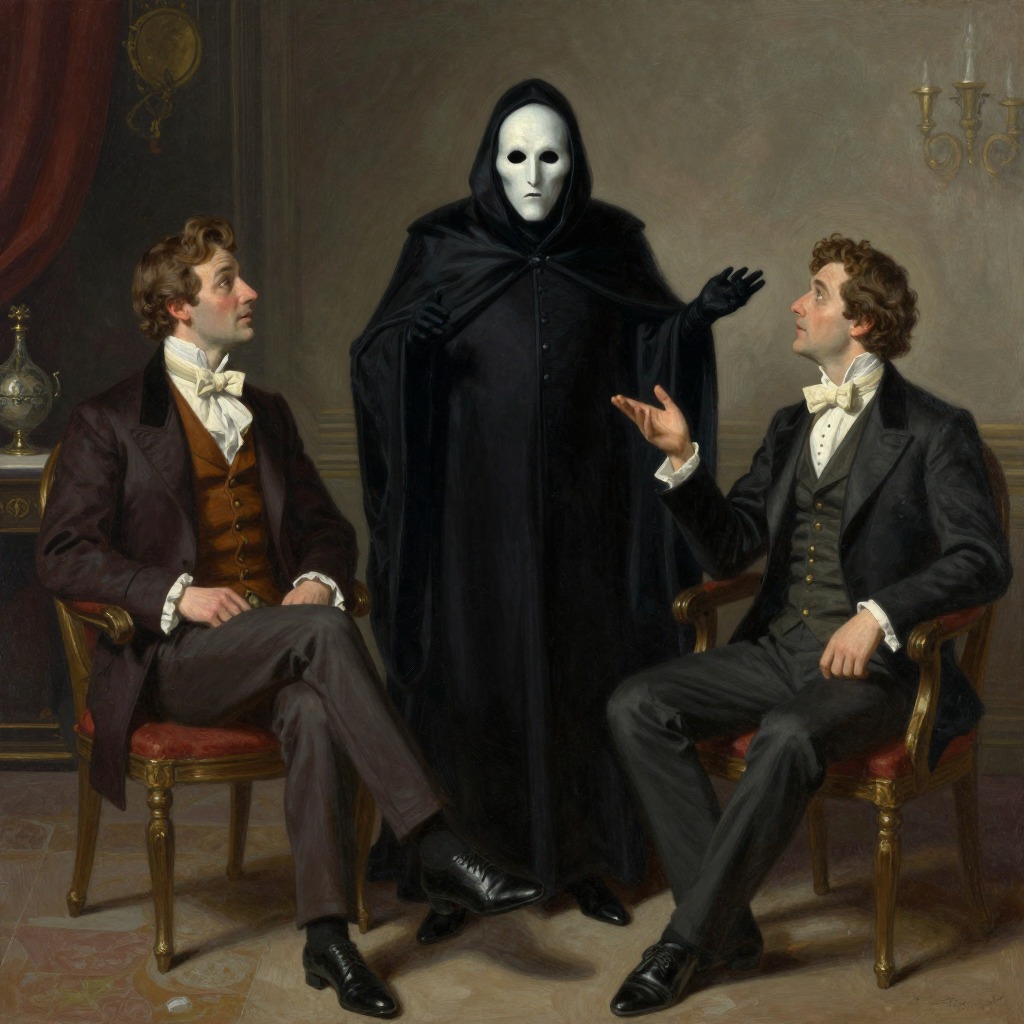
When M. Poligny, one of the retiring managers, presents the Memorandum-Book to his successors, Firmin Richard and Armand Moncharmin, he shows them a copy that is identical to their own except for a crucial addition. At the end of the conditions, a paragraph has been added in red ink, written in a queer, labored handwriting, as though produced by dipping the heads of matches into the ink—the writing of a child that has never got beyond the down-strokes. This paragraph reads: "5. Or if the manager, in any month, delay for more than a fortnight the payment of the allowance which he shall make to the Opera ghost, an allowance of twenty thousand francs a month, say two hundred and forty thousand francs a year." This clause effectively creates a fifth condition, making the ghost a paid employee of the Opera.
Further on, in the clause specifying the days on which certain private boxes are reserved for the president of the republic and other dignitaries, another line has been added in red ink: "Box Five on the grand tier shall be placed at the disposal of the Opera ghost for every performance." This second addition grants the ghost a permanent, exclusive claim to Box Five, a privilege that the managers later discover is enforced with supernatural precision.
The Managers' Reaction and the Ghost's Demands
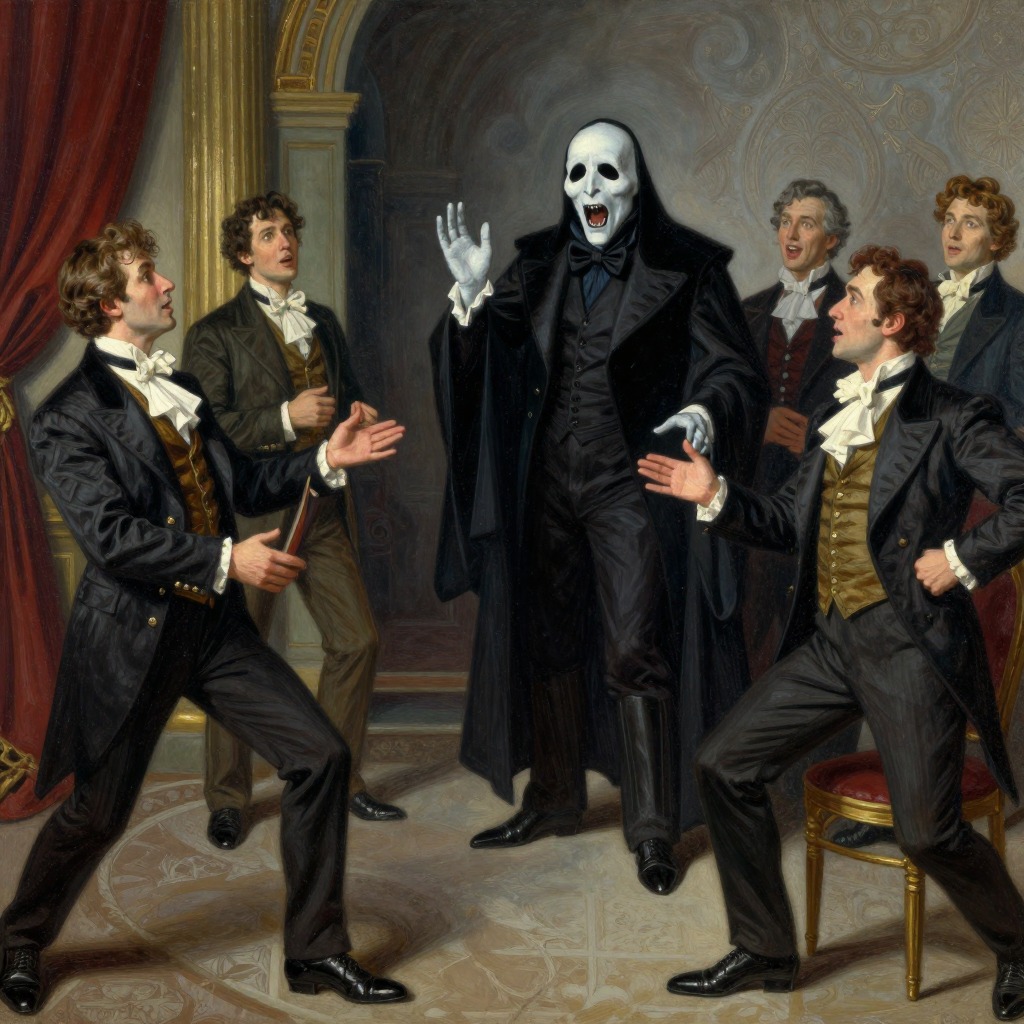
When Richard and Moncharmin first see these additions, they treat them as a practical joke by their predecessors. Richard, with his reputation for practical joking, finds the whole affair amusing and asks, "Is this all? Does he not want anything else?" Poligny, however, is deadly serious, explaining that the ghost's demands have made management impossible. He and Debienne have lost money on Box Five, which they could not sell, and they have been forced to pay the monthly allowance. They prefer to retire rather than continue working for a ghost. The new managers laugh at the idea, with Richard suggesting they have the ghost arrested, but Poligny and Debienne reply that they have never seen him, and that selling the box is impossible. The scene ends with the four men leaving the office, Richard and Moncharmin having "never laughed so much in their lives."
The Memorandum-Book as a Tool of Blackmail
The Memorandum-Book quickly proves to be more than a joke. The ghost's first letter to the new managers references the book directly, stating that he has received a reply from Debienne and Poligny proving that Richard and Moncharmin know all about his Memorandum-Book and are treating him with "outrageous contempt." The letter ends with the threat: "IF YOU WISH TO LIVE IN PEACE, YOU MUST NOT BEGIN BY TAKING AWAY MY PRIVATE BOX." This establishes the book as the ghost's legal claim, a document he uses to justify his demands and to punish any infringement. The managers' initial skepticism gives way to fear as they realize the ghost is not a myth but a living force that enforces his contract with deadly precision.
The Legacy of the Memorandum-Book
The Memorandum-Book's red-ink clauses become the template for the ghost's ongoing extortion. The monthly allowance of twenty thousand francs is paid, though the managers attempt to trap the ghost by substituting fake notes, only to be outwitted. The book's existence also explains the ghost's power over the Opera: he is not merely a supernatural presence but a contractual claimant, a shadowy figure who has written himself into the very fabric of the institution. The Memorandum-Book thus stands as a symbol of Erik's genius for manipulation, his ability to turn the Opera's own rules against its managers, and his relentless pursuit of control over the world that has rejected him.